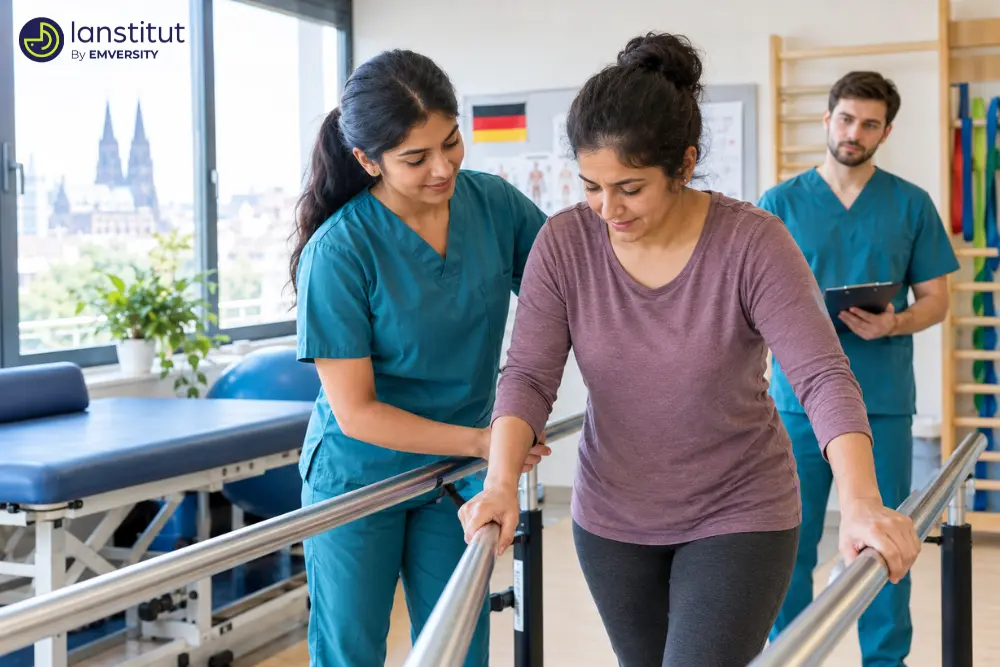
Germany is an option worth exploring for physiotherapy graduates from Kerala who want to build an international career. If you have completed a BPT degree or another recognised physiotherapy qualification, you may be wondering whether you can work in Germany, what German language level you need, and how to get your qualification recognised.
The good news is that physiotherapists with qualifications from India can apply for professional recognition in Germany. However, completing a physiotherapy course in Kerala does not automatically give you permission to practise there. You must follow the required recognition process, meet the language requirements, and obtain the necessary authorisation.
This guide explains the process in simple terms, from learning German to preparing your documents and understanding the next steps.
Yes. Kerala graduates may be eligible to work as physiotherapists in Germany if they meet the applicable professional recognition, language, and immigration requirements.
Germany treats physiotherapy as a regulated profession. This means you generally need official recognition of your foreign qualification and a state permit to use the professional title and practise as a physiotherapist.
The German authority responsible for your application will assess your education and training to determine whether they are equivalent to the German qualification. Your German language skills, health suitability, and personal suitability may also be assessed. Requirements can vary depending on the federal state where you apply.
You can check the official German government information portal here:
Recognition in Germany – official qualification recognition portal
Important: Being eligible to apply does not guarantee recognition, employment, or a visa. Each application is assessed according to the applicable rules.
Physiotherapy involves much more than performing exercises or following a treatment plan. Physiotherapists communicate directly with patients, understand symptoms, explain movements, give instructions, and monitor recovery.
In Germany, you may need to communicate with patients who have different levels of mobility, pain, confidence, and understanding. You may also need to discuss treatment plans with doctors and other healthcare professionals.
German language skills can help you:
For these reasons, learning German is an important part of preparing for a physiotherapy career in Germany.
One of the most common questions among physiotherapy graduates is whether B1 German is enough to work in Germany.
In many recognition procedures for physiotherapists, B2 German is the expected level for professional authorisation. The exact requirements and the accepted proof of language proficiency should be confirmed with the authority responsible for the federal state where you plan to apply.
B1 German: At this level, learners can usually manage many everyday situations, understand the main points of clear conversations, and explain familiar experiences. It is a useful milestone for people preparing to live in Germany.
B2 German: At this level, learners can generally understand more complex information, communicate with greater independence, and explain their ideas in more detail. These skills are especially relevant when discussing treatment, explaining rehabilitation exercises, and communicating in professional settings.
B1 can be an important step in your learning journey, but you should not assume that it is sufficient for physiotherapist recognition.
Before choosing an examination or planning your application, confirm the accepted certificate, required level, and timing directly with the competent authority.
Your educational background is an important part of the recognition process.
If you completed a Bachelor of Physiotherapy (BPT) in Kerala, you can investigate whether your qualification meets the requirements for recognition in your intended German state.
The authority may examine several aspects of your training, including:
The authority compares your training with the German requirements. If significant differences are identified, you may be informed about additional steps or compensatory measures that you need to complete.
Do not assume that every BPT qualification will receive the same decision. The outcome depends on your individual education and the applicable recognition procedure.
If you are planning to work in Germany, it helps to divide the process into manageable steps.
Start by checking that you have the required educational documents from your college or university.
Keep your degree certificate, transcripts, syllabus, and clinical training records organised. If you have work experience, collect the relevant employment certificates and supporting documents.
If you have not completed your physiotherapy qualification yet, you can still begin learning German and researching the requirements for your future application.
Build your German skills from A1 onwards and work towards the level required for your intended recognition route.
A typical learning progression includes:
The time required to reach B2 varies from person to person. Your starting level, study routine, speaking practice, and consistency will all influence your progress.
Try to develop listening, speaking, reading, and writing together. Physiotherapists should pay particular attention to listening and speaking because patient communication is an important part of the profession.
Germany has different federal states, and the competent authority for professional recognition depends on where you intend to practise.
Before submitting your application, identify the relevant authority and check its instructions carefully.
You can begin your search through the official Recognition in Germany portal.
Check the authority's current requirements for:
This step can help you avoid preparing documents that do not meet the authority's requirements.
The exact list depends on the authority and your personal circumstances. Documents commonly requested may include:
Ask the relevant authority whether your documents must be translated into German by an accepted translator and whether copies need certification.
Do not rely on a general checklist alone. Follow the instructions provided for your specific application.
Submit your application to the competent authority and provide the requested documents.
The authority will assess your qualification and determine whether it meets the applicable German professional standards. It may ask for missing documents or further information.
If your training is assessed as equivalent and you meet the other requirements, you may be able to obtain the required authorisation.
If substantial differences are found, you may receive information about the additional measures needed to address them. The options depend on the decision and the applicable rules.
Once you understand your recognition pathway, you can research physiotherapy employers and suitable job opportunities.
Potential workplaces may include rehabilitation centres, hospitals, physiotherapy practices, and other healthcare facilities. Available positions and their requirements vary by employer and location.
Check whether a prospective employer requires completed recognition, a particular German level, relevant experience, or additional documents.
An employer's interest in your application does not replace the legal authorisation required to practise as a physiotherapist.
If you are applying from India, you must also meet the relevant German immigration requirements.
The correct route depends on your circumstances, such as whether you have a job offer, whether your qualification has been recognised, and whether you need to complete further recognition measures.
Read the official Make it in Germany visa information and check the applicable requirements before making travel or financial commitments.
Professional recognition and immigration permission are separate matters. Meeting one set of requirements does not automatically mean that you meet the other.
There is no single timeline that applies to every physiotherapist from Kerala.
The overall preparation period can include German language learning, collecting documents, translation, professional recognition, any additional measures, job applications, and immigration procedures.
Your timeline may depend on:
For this reason, be careful with claims that promise a guaranteed job or a fixed migration timeline.
A practical approach is to start learning German early while researching recognition requirements in parallel.
Yes. If you are studying BPT or have recently graduated, beginning German early can help you prepare for the next stage of your career.
You do not necessarily need to wait until every document is ready before starting language training.
You can use your learning time to build a strong foundation in German grammar, vocabulary, pronunciation, listening, and speaking. As your skills develop, you can also begin learning vocabulary related to anatomy, movement, pain, rehabilitation, and patient instructions.
For example, practise how to introduce yourself, ask a patient about discomfort, explain a simple movement, and check whether a patient has understood your instructions.
Remember that professional vocabulary is most useful when it is supported by a good general understanding of German.
If you are balancing work, studies, or internship duties, a regular routine can make learning more manageable.
Daily activitySuggested timeVocabulary and revision15 minutesGrammar practice15 minutesListening to German15 minutesSpeaking practice15 minutesReading or writing10 minutes
This is an example, not a compulsory schedule. You can adjust it to suit your availability and learning level.
Try these habits:
Consistency is more useful than studying for long hours once in a while.
Planning to work abroad can be exciting, but incomplete information may lead to unnecessary delays or expenses.
B1 is a useful milestone, but many physiotherapist recognition procedures require B2. Check the requirements for your intended state before deciding which examination to take.
Your qualification must go through the relevant recognition process. The authority will assess your education and determine whether any additional measures are needed.
Your syllabus and clinical training details may be important during qualification assessment. Collect official records early and ask your college about the documents it can issue.
A language certificate can be important, but patient communication also requires practical listening and speaking skills. Include real-life conversations in your preparation.
No language course or private organisation can guarantee that your qualification will be recognised, that you will receive a job, or that your visa will be approved. Verify professional and immigration requirements through the relevant official authorities.
Requirements and procedures may differ by location. Confirm the current rules with the authority responsible for your intended place of work.
For Kerala physiotherapy graduates planning to explore Germany, learning German is an important part of preparing for the process.
Lanstitut provides German language training for learners who want to develop their language skills step by step. Depending on the course available, learners can explore structured levels, from beginner German towards higher proficiency.
When choosing a course, physiotherapy graduates should look for support with:
Before enrolling, ask about the current course schedule, available learning modes, class duration, fees, and examination preparation options. Confirm that the course suits your current level and target timeline.
Planning to learn German for your future in Germany? Contact Lanstitut to discuss your current level and explore a suitable learning plan.
Please remember that Lanstitut is a language training institute, not a recruitment agency. Language training does not guarantee professional recognition, employment, placement, or visa approval. You must meet the requirements set by the relevant authorities and employers.
Yes, a Kerala BPT graduate may apply for professional recognition in Germany. The relevant authority must assess the qualification, and the applicant must meet the applicable language, professional, and immigration requirements.
German language proficiency is generally required for professional recognition because physiotherapists need to communicate with patients and colleagues. The exact level and accepted proof must be confirmed with the competent authority.
You should not assume that B1 is sufficient. B2 is commonly required in physiotherapist recognition procedures. Check the current requirements for the federal state where you intend to practise.
Yes. Starting early can give you more time to build your language skills before graduation. You can study German alongside your academic work, provided you manage your schedule realistically.
Recognition is assessed individually. The authority compares your education and training with the relevant German requirements. The result depends on your qualification and the applicable procedure.
Documents may include your degree certificate, academic transcripts, detailed syllabus, proof of identity, CV, training records, and evidence of professional experience. Additional documents, translations, certifications, and medical or personal suitability evidence may be required.
You can explore and begin the recognition process while living in India. Check the official Recognition in Germany portal and the competent authority's instructions to confirm how to submit your application from abroad.
Do not assume that a specific amount of work experience is always mandatory. The applicable requirements depend on the recognition procedure and your circumstances. Work experience may be relevant to the assessment, so document it if you have any.
No. German language training can help you develop the skills needed for communication, but it does not guarantee qualification recognition, employment, or visa approval. These depend on separate requirements and decisions.
Start with the Recognition in Germany portal to identify the relevant recognition procedure. For immigration information, consult Make it in Germany.
Germany may be a career option for physiotherapy graduates from Kerala, but preparation involves more than obtaining a degree or learning a few German phrases.
You need to understand the professional recognition process, work towards the required German language level, prepare the correct documents, and check the relevant employment and immigration rules.
Start with reliable information, build your German skills consistently, and verify the requirements with the official authority responsible for your intended place of work. With a clear plan, you can make better-informed decisions about your next career step.