German is one of the most widely learned languages in the world, especially for students and professionals planning to study or work in Germany. To measure language proficiency, German follows an internationally recognized system known as the Common European Framework of Reference for Languages (CEFR).
The CEFR divides language proficiency into different levels that help learners progress step by step. These levels range from beginner to advanced and are used by universities, employers, and immigration authorities to evaluate German language skills.
Understanding German language levels is important for anyone planning to take language exams, pursue higher education, or build a career in Germany.
German language levels are standardized stages used to measure a person's ability to understand, speak, read, and write in German. The levels are based on the CEFR framework and are recognized internationally.
The six levels are divided into three main categories:
Each level represents a different stage of language learning and communication ability.
The A1 level is the starting point for learning German. At this stage, learners become familiar with basic vocabulary and simple sentences used in everyday situations.
Learners at this level can:
Typical topics include:
A1 is often required for certain visa categories such as family reunification.
The A2 level builds on the basics learned at A1 and allows learners to communicate in simple everyday situations.
At this level, learners can:
Learners start gaining more confidence in speaking and understanding basic German communication.
The B1 level is an important milestone in learning German. Many employers and vocational training programs in Germany require at least B1 level proficiency.
At this stage, learners can:
B1 learners can communicate independently in most daily situations.
This level is commonly required for:
The B2 level demonstrates stronger communication skills and the ability to handle more complex language situations.
Learners at this level can:
B2 level is often required for:
Many candidates aiming for career opportunities in Germany target B2 level proficiency.
The C1 level indicates advanced language skills. Learners can communicate fluently and understand complex texts.
At this level, learners can:
C1 is usually required for university programs taught in German.
The C2 level represents near-native fluency in German.
Learners at this stage can:
C2 is the highest level of German language proficiency.
Learning speed depends on practice, training, and consistency. However, the average time required is:
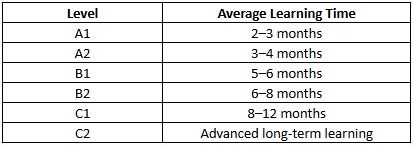
Regular practice and structured training can significantly improve learning speed.
Different exams are available to certify German language proficiency.
Common exams include:
These certifications are accepted by universities, employers, and immigration authorities.
German language levels help institutions evaluate communication skills accurately. These levels are important for several reasons.
Students applying to German universities often need B2 or C1 level certification.
Employers prefer candidates who can communicate effectively in German. Many jobs require B1 or B2 proficiency.
Some visa categories require proof of German language skills.
Learning German improves global career prospects and professional growth.
Learning German becomes easier with the right strategy.
Consistent practice helps learners improve faster. Even short daily study sessions can make a big difference.
Speaking practice improves fluency and confidence.
Learning new words regularly helps improve reading and listening skills.
Watching German videos or listening to podcasts helps improve pronunciation and comprehension.
Professional training provides a systematic learning path that helps learners progress efficiently through different levels.
Lanstitut provides structured German language training designed to help learners progress through internationally recognized language levels.
Training is offered from A1 to B2 levels, focusing on all essential communication skills including speaking, listening, reading, and writing. The learning approach includes interactive sessions, grammar training, vocabulary building, and exam preparation.
Lanstitut supports students and professionals preparing for international opportunities through:
Lanstitut provides German language courses in Calicut, Kochi, Chennai, Bangalore, and Mangalore, along with flexible online learning options.
German language levels provide a clear and structured path for learning the language. Each level builds on the previous one, helping learners gradually develop stronger communication skills.
Whether your goal is higher education, career growth, or living in Germany, understanding German language levels helps you plan your learning journey effectively.
With consistent practice, proper guidance, and structured training, learners can progress through the levels and achieve their German language goals successfully.